
Food Is Information: Why What You Eat Is a Signal, Not Just Fuel
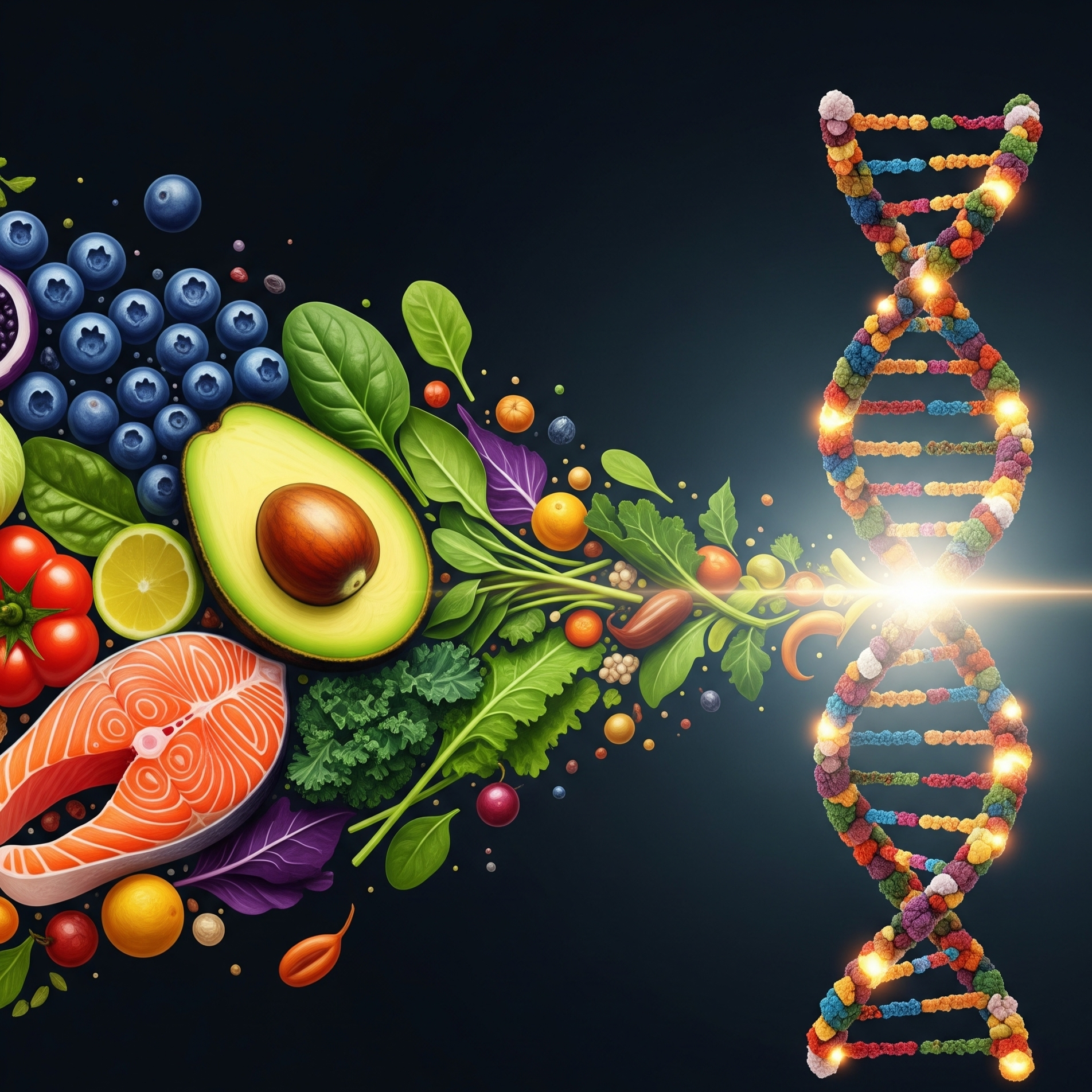
Your fork is the most powerful coding tool you own. Use it to write a better set of instructions for your body.
The calorie model of nutrition is not wrong. It's just incomplete.
Calories matter. Energy balance is real. But reducing food to units of energy misses what food actually does once it enters your body. It misses the part that explains why two people can eat the same number of calories and have completely different health outcomes. Why one person eating 2,000 calories feels sharp, energetic, and recovered, and another eating the same amount feels inflamed, foggy, and tired.
The difference is the quality of the information those calories are carrying.
Every meal you eat is a set of instructions. Specific compounds in specific foods communicate directly with your cells, your hormones, your immune system, and your gut microbiome. Your body reads those instructions and responds accordingly. The question isn't just how much you're eating. It's what your food is telling your biology to do.
Hormonal Signaling
Food triggers hormonal responses that shape your energy, mood, hunger, and metabolic function for hours after the meal.
Refined carbohydrates and added sugars spike blood glucose rapidly, triggering a large insulin response. Insulin clears the glucose, blood sugar drops, and within a couple of hours you're hungry again, often craving more of the same. Repeat this cycle consistently and over time the cells become less responsive to insulin, requiring more of it to do the same job. This is insulin resistance, and it's the metabolic foundation of type 2 diabetes, obesity, and a cluster of related conditions.
Contrast that with a meal built around protein, healthy fats, and fiber-rich vegetables. The glucose response is slower and more moderate. Satiety hormones like leptin and GLP-1 signal fullness more effectively. Energy is stable for longer. The hormonal conversation your food is having with your body is fundamentally different, and the downstream effects on how you feel and function reflect that.
This is why the framework treats diet as information rather than fuel. The same caloric input can send your hormones toward stability and repair or toward stress and dysfunction. The content of the meal determines which message gets sent.
Inflammation
Chronic low-grade inflammation is one of the most significant drivers of disease and one of the least discussed.
Acute inflammation is useful. It's your immune system responding to injury or infection, doing its job, resolving the problem, and standing down. Chronic inflammation is different. It's the immune system stuck in a low-level activation state, responding to ongoing signals that something is wrong. Over time it damages tissue, impairs brain function, disrupts hormonal regulation, and is implicated in everything from cardiovascular disease to depression.
Diet is one of the primary drivers of chronic inflammation. Processed foods, refined seed oils, excess sugar, and highly processed grains send inflammatory signals consistently. Whole foods, particularly fatty fish, olive oil, leafy greens, berries, and nuts, send anti-inflammatory signals. Your body is reading both constantly.
The cumulative effect of years of pro-inflammatory eating is significant. And the cumulative effect of consistently anti-inflammatory eating is equally significant in the other direction. This is not about individual meals. It's about what the overall pattern of your diet is telling your immune system to do day after day.
The Gut-Brain Connection
The gut microbiome is one of the most actively researched areas in health science and the findings continue to be surprising.
Your digestive tract contains roughly 100 trillion microorganisms, a complex ecosystem that influences far more than digestion. The gut and brain communicate constantly through what's called the gut-brain axis, a bidirectional network involving the vagus nerve, the immune system, and dozens of neurotransmitters. Approximately 90 percent of the body's serotonin is produced in the gut, not the brain.
The composition of your microbiome, which strains thrive and which ones don't, is shaped significantly by diet. A diet rich in fiber, fermented foods, and diverse plant matter supports a diverse, healthy microbiome. A diet heavy in ultra-processed foods, sugar, and additives degrades it. The microbiome in turn influences mood, anxiety, cognitive clarity, immune function, and even food cravings.
This is the clearest example of what "food as information" actually means in practice. What you eat shapes the ecosystem that shapes the signals going to your brain. You're not just feeding yourself. You're feeding the system that determines how you think and feel.
What This Changes
Framing food as information rather than fuel shifts how you make decisions about eating.
Fuel is something you consume because you need energy. Any fuel will do as long as the quantity is right. Information is something you choose carefully because the content matters. What you're telling your body to do matters.
This doesn't mean every meal needs to be optimized or that eating should become a source of anxiety. It means developing a baseline awareness of what the overall pattern of your diet is communicating to your biology.
More whole foods, fewer processed ones. More fiber, less refined sugar. More nutrient density, less empty volume. These aren't rigid rules. They're the general direction of a diet that sends your body signals of health rather than signals of stress.
Your fork is one of the most consistent levers you have over how you feel, think, and perform. Use it accordingly.
